



Adrenergic Receptor
Beta Receptor
Adrenergic receptors are a class of G protein-coupled receptors that are targets of the catecholamines, especially norepinephrine and epinephrine. Many cells possess these receptors, and the binding of a catecholamine to the receptor will generally stimulate the sympathetic nervous system. The sympathetic nervous system is responsible for the fight-or-flight response, which includes widening the pupils of the eye, mobilizing energy, and diverting blood flow from non-essential organs to skeletal muscle. There are two main groups of adrenergic receptors, α and β, with several subtypes. α receptors have the subtypes α1 and α2. β receptors have the subtypes β1, β2 and β3. All three are linked to Gs proteins, which in turn are linked to adenylate cyclase. Agonist binding thus causes a rise in the intracellular concentration of the second messenger cAMP. Downstream effectors of cAMP include cAMP-dependent protein kinase (PKA), which mediates some of the intracellular events following hormone binding.
Adrenergic Receptor Isoform Specific Products
All Product Categories
-
Adrenergic Receptor Inhibitors
(267)
View all products
-
Adrenergic Receptor Agonists
(502)
View all products
-
Adrenergic Receptor Antagonists
(546)
View all products
-
Adrenergic Receptor Activators
(45)
View all products
-
Adrenergic Receptor Modulators
(19)
View all products
-
Adrenergic Receptor Degrader
(1)
View all products
-
Adrenergic Receptor Controls
(8)
View all products
-
Adrenergic Receptor Substrates
(3)
View all products
-
Adrenergic Receptor Ligands
(17)
View all products
-
Adrenergic Receptor Related Products (1622)
Related Products (1622)

-
Antibodies (4)
-
Adrenergic Receptor Isoform Comparison
-
Bitolterol
 0 ImagesCat. No.: HY-A0267CAS No.: 30392-40-6Bitolterol is a β2-adrenergic agonist with bronchodilator activity. Bitolterol is classified as a prodrug and is primarily used for the suppression of respiratory diseases. Bitolterol is considered safe for use during breastfeeding, as the amount that can enter breast milk is very limited.
-
(±)-WB 4101
 0 Images(±)-WB 4101 is a highly selective α1-adrenergic receptor antagonist. (±)-WB 4101 blocks norepinephrine-induced vascular smooth muscle contraction to exert antihypertensive and benign prostatic hyperplasia (BPH)-relieving effects. (±)-WB 4101 is promising for research of hypertension and BPH.
-
Batefenterol Succinate
 0 ImagesCat. No.: HY-12980ACAS No.: 945905-37-3Synonyms: GSK961081 Succinate; TD-5959 SuccinateBatefenterol Succinate (GSK961081 Succinate) is a first-of-its-kind inhaled bifunctional bronchodilator with smooth muscle relaxant properties. The activities of Batefenterol Succinate include acting as a smooth muscle parasympathetic antagonist and a beta2-adrenoceptor agonist. Batefenterol Succinate is used to improve respiratory function, especially in patients with chronic obstructive pulmonary disease (COPD).
-
Indacaterol acetate
 0 ImagesCat. No.: HY-14299DCAS No.: 1000160-96-2Indacaterol acetate is an orally active ultra-long-acting β2 adrenergic receptor (ADRB2) agonist. Indacaterol acetate inhibits NF-κB activity in a β-arrestin2-dependent manner, preventing further lung damage and improving lung function in COPD (chronic obstructive pulmonary disorder). Indacaterol acetate can also be used in cardiovascular disease research.
-
Arotinolol hydrochloride
 0 ImagesArotinolol hydrochloride is a nonselective α/β-adrenergic receptor blocker and a vasodilating β-blocker. Arotinolol hydrochloride also shows potency for inhibiting the binding of the radioligand 125I-ICYP to 5HT1B-serotonergic receptor sites. Arotinolol hydrochloride is an antihypertensive agent for the treatment of a variety of cardiovascular pathologies as well as non-cardiovascular diseases.
-
Phenoxybenzamine (benzyl-2,3,4,5,6-d5) hydrochloride
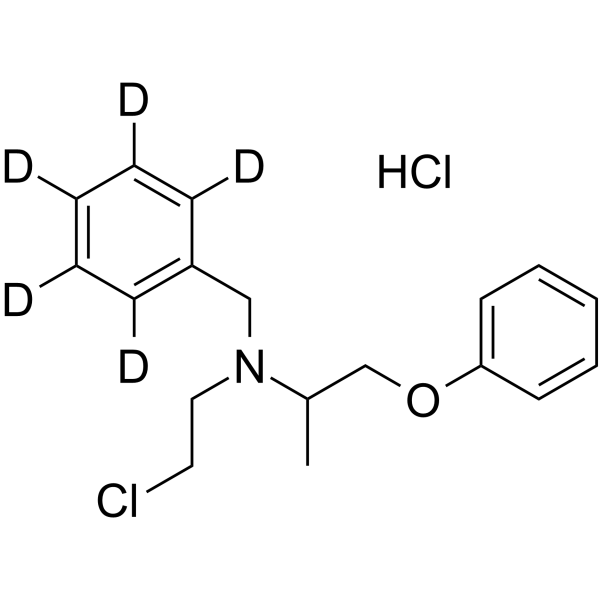 0 ImagesCat. No.: HY-B0431AS1CAS No.: 1398065-71-8Phenoxybenzamine (benzyl-2,3,4,5,6-d5) (hydrochloride) is the deuterium labeled Phenoxybenzamine hydrochloride. Phenoxybenzamine hydrochloride is a nonselective, irreversible, orally active α-adrenoceptor antagonist that is commonly used for the research of hypertension, specifically caused by pheochromocytoma. Phenoxybenzamine hydrochloride also shows antitumor activity[1][2][3].
-
(1R,2S)-Dihydrobupropion
 0 ImagesCat. No.: HY-178249CAS No.: 292055-72-2(1R,2S)-Dihydrobupropion is a norepinephrine-dopamine reuptake inhibitor. (1R,2S)-Dihydrobupropion is one of the active metabolites of Bupropion (HY-B0403). (1R,2S)-Dihydrobupropion can be used for the researches of neurological disease and inflammation.
-
Asenapine-13C,d3
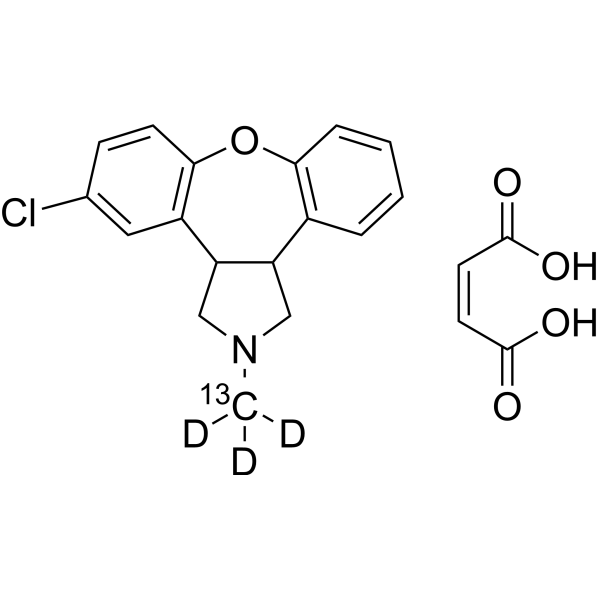 0 ImagesCat. No.: HY-10121S2CAS No.: 2747915-30-4Synonyms: Org 5222-13C,d3Asenapine-13C,d3 is 13C and deuterated labeled Asenapine (HY-10121). Asenapine (Org 5222), an atypical antipsychotic, is an antagonist of serotonin receptors (pKi: 8.4-10.5), adrenoceptors (pKi: 8.9-9.5), dopamine receptors (pKi: 8.9-9.4) and histamine receptors (pKi: 8.2-9.0). Asenapine can be used in the research of schizophrenia and bipolar disorder.
-
Ractopamine-d9 hydrochloride
 0 ImagesCat. No.: HY-B1421S1Synonyms: LY031537-d9Ractopamine-d9 (LY031537-d9) hydrochloride is the deuterium labeled Ractopamine hydrochloride (HY-B1421). Ractopamine (LY031537) hydrochloride is a potent β-adrenergic receptor (βAR) agonist with Kd values of ~25 nM for pig β1AR and β2AR. Ractopamine hydrochloride is linked to protein metabolism. Ractopamine hydrochloride can be used for researching to increase lean tissue growth and improve production efficiency in pigs.
-
Mefenidil
 0 ImagesCat. No.: HY-105925CAS No.: 58261-91-9Synonyms: MCN 2378Mefenidil (MCN 2378) is a selective cerebral vasodilator that is not affected by beta-adrenergic blockade. Mefenidil can be used in the study of cardiovascular disease. In monkey models, mefenidil preferentially increases cerebral blood flow over systemic (femoral) blood flow. Mefenidil is also able to reduce systemic arterial pressure in anesthetized dogs.
-
Carazolol-d7 hydrochloride
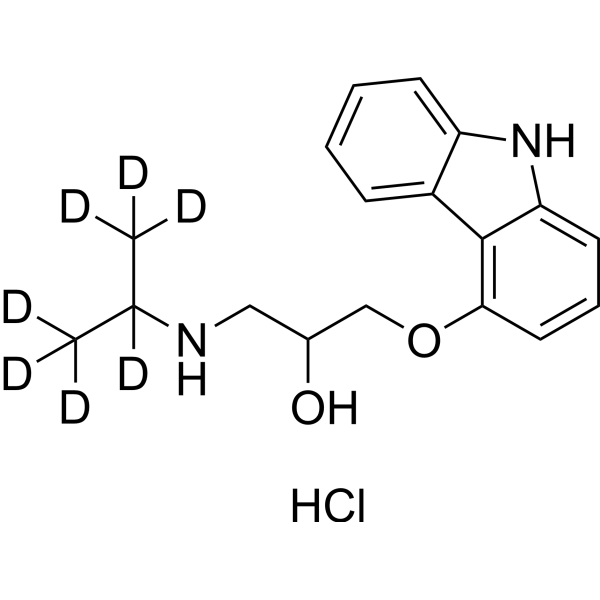 0 ImagesCat. No.: HY-107327S1CAS No.: 1276197-44-4Carazolol-d7 (hydrochloride) is the deuterium labeled Carazolol hydrochloride (HY-W517264). Carazolol hydrochloride is a highly potent antagonist of β1/β2 adrenoceptor. Carazolol hydrochloride is also a potent, selective β3-adrenoceptor agonist. Carazolol hydrochloride can be used in the research of hypertension.
-
Daledalin
 0 ImagesCat. No.: HY-125047ACAS No.: 22136-27-2Synonyms: UK 3557Daledalin (UK 3557) is an orally active indoline antidepressant targeting noradrenaline and serotonin transporters in the brain. Daledalin enhances central monoaminergic neurotransmission to alleviate depressive symptoms. Daledalin is proming for rasearch of depression, including endogenous and neurotic depression.
-
Fluparoxan hydrochloride
 0 ImagesCat. No.: HY-106769CCAS No.: 105227-44-9Synonyms: GR50360 hydrochlorideFluparoxan hydrochloride is an orally active, selective and competitive alpha 2-adrenoceptor antagonist. Fluparoxan hydrochloride is an anti-depressant agent.
-
Synephrine (Standard)
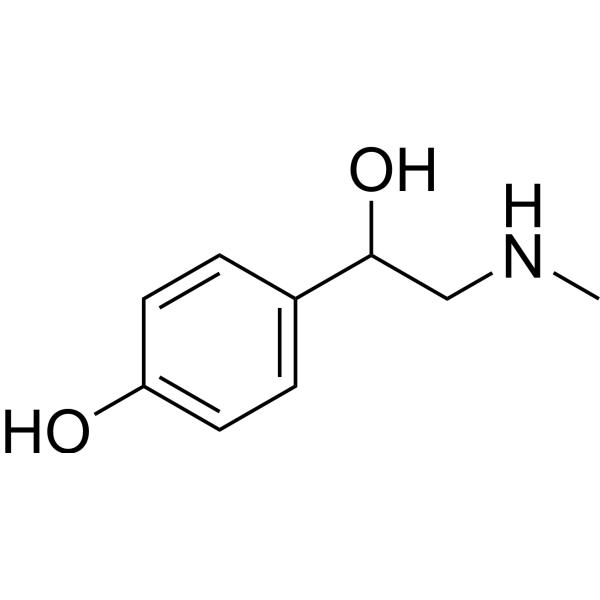 0 ImagesSynephrine (Standard) is the analytical standard of Synephrine. This product is intended for research and analytical applications. Synephrine (Oxedrine), an alkaloid, is an α-adrenergic and β-adrenergic agonist derived from the Citrus aurantium. Synephrine is a sympathomimetic compound and can be used for weight loss.
-
Docarpamine
 0 ImagesCat. No.: HY-W752502CAS No.: 74639-40-0Docarpamine is an orally active dopamine prodrug that can be hydroxylated in the small intestine and liver to form active dopamine. Docarpamine mainly activates D1-like receptors in peripheral blood vessels to lower blood pressure and heart rate in a state of spontaneous hypertension. Docarpamine exerts a pressor and tachycardic effect by activating D1-like receptors, vasopressin V1 receptors, and α-adrenergic receptors in normal blood pressure conditions. Docarpamine can be used for research on renal vascular dilation and diuresis.
-
Trimazosin
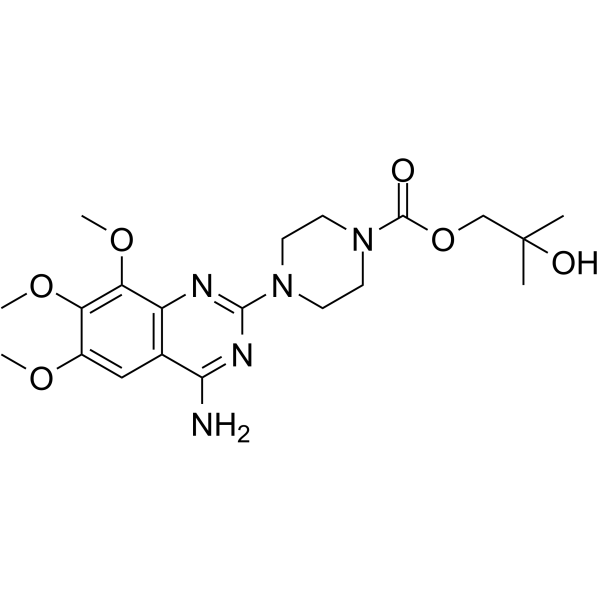 0 ImagesCat. No.: HY-106554CAS No.: 35795-16-5Trimazosin is an orally active, quinazoline derivative which is structurally related to prazosin. Trimazosin shows hypotensive effect by selectively block α1-adrenoceptors.
-
Edivoxetine
 0 ImagesCat. No.: HY-15413CAS No.: 1194508-25-2Synonyms: LY 2216684Edivoxetine (LY 2216684) is a potent and selective norepinephrine reuptake inhibitor. Edivoxetine can be used for the study of major depressive disorder (MDD) and attention-deficit/hyperactivity disorder (ADHD).
-
Nolomirole
 0 ImagesCat. No.: HY-106973CAS No.: 90060-42-7Synonyms: CHF 1035 free baseNolomirole (CHF 1035) is an orally active and selective DA2 dopaminergic receptor/α2-adrenoceptor agonist. Nolomirole attenuates the heart failure signs in the Monocrotaline (HY-N0750)-induced congestive heart failure model. Nolomirole increases cardiac output.
-
RWJ52353 hydrochloride
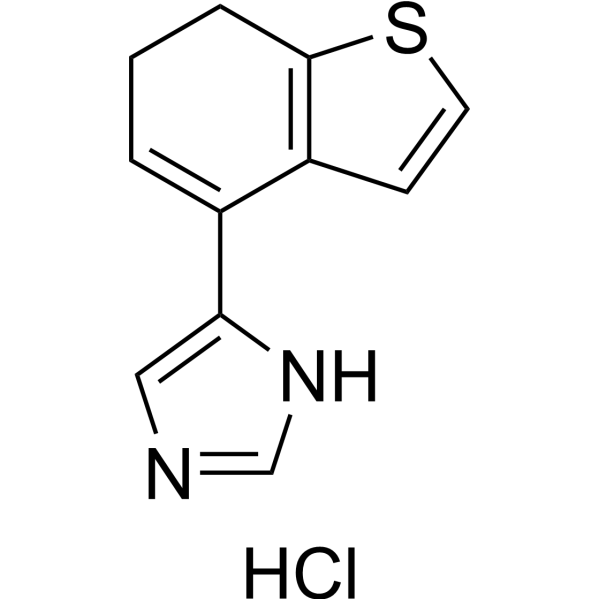 0 ImagesCat. No.: HY-103216ACAS No.: 245744-13-2RWJ-52353 hydrochloride is an orally potent, highly selective α2D adrenergic receptor agonist (Ki: 1.5 nM) with potential analgesic effects. RWJ-52353 hydrochloride demonstrated analgesic activity in abdominal tests in rats and mice, and improved agitation in mice in the hot plate test and tail flick test. RWJ-52353 hydrochloride also regulates the organic cation transporter (OCT) subtype, inhibiting rOCT1 and rOCT2 with IC50s of 100 μM and 20 μM respectively; it also activates rOCT3, affecting [3H]-1- in cells. Methyl-4-phenylpyridinium ([3H]MPP
-
Naftopidil dihydrochloride
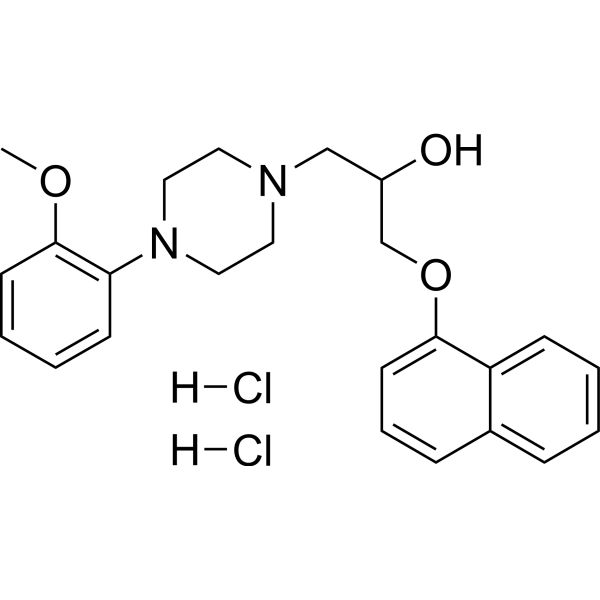 0 ImagesCat. No.: HY-B0391ACAS No.: 57149-08-3Synonyms: KT-611 dihydrochloride; BM-15275 dihydrochlorideNaftopidil dihydrochloride (KT-611 dihydrochloride) is a selective alpha1-adrenoceptor antagonist, with Kis of 3.7 nM, 20 nM and 1.2 nM for the cloned human α1a-, α1b- and α1d-adrenoceptor subtypes, respectively. Naftopidil dihydrochloride has antiproliferative effects. Naftopidil dihydrochloride can be used for the research of prostate hyperplasia.




